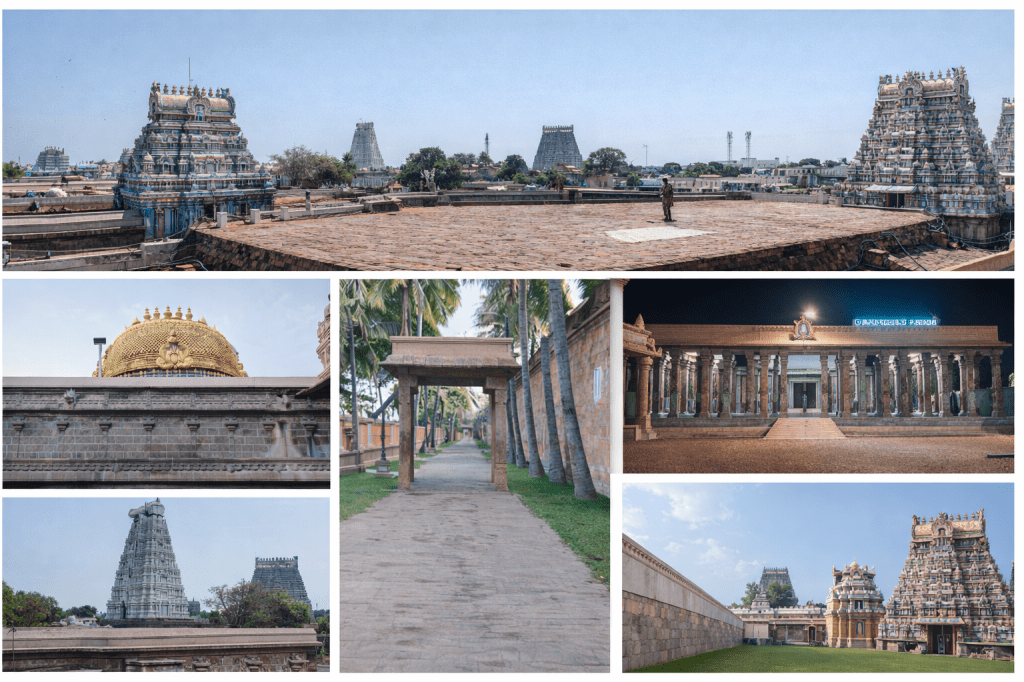
Early Morning Darshan at Sri Ranganathaswamy Temple, Srirangam
It was around 5:15 AM when we stepped out of our hotel rooms for our first darshan of the day.
The temple opens at 6:00 AM with the Viswaroopa Sevai, a beautiful ritual where the Lord is ceremonially awakened. During this ritual, a cow, a horse, and an elephant are brought before the sanctum as part of the tradition.
We joined the queue and waited quietly for the ceremony to begin.
Around 5:45 AM, the devotees were ushered inside the temple complex. As we approached the inner sanctum (Garbhagriha), we witnessed something truly fascinating. First, a black cow entered the temple, followed by a white horse, and finally an elephant carrying a priest.
Inside the temple, the animals were positioned near the sanctum entrance as the priests began chanting the sacred hymns to awaken the Lord.
When the chanting concluded and the curtain before the deity was lifted, the elephant let out a loud trumpet that reverberated through the temple halls.
It was a surreal and unforgettable moment.
Darshan of Lord Ranganatha
After the ritual concluded, the animals were gently moved away and devotees were allowed to enter the Garbhagriha one by one.
There we had a magnificent darshan of Lord Ranganatha.
Sri Ranganatha is the reclining form of Lord Vishnu, resting on the serpent Adisesha. The deity is carved from a single stone, and His majestic reclining form measures nearly 20 feet in length.
Such is the sheer scale and divine presence of the deity that it fills the sanctum with an overwhelming sense of grandeur and serenity.
The Largest Functioning Hindu Temple Complex
The Sri Ranganathaswamy Temple in Srirangam is believed to be the largest functioning Hindu temple complex in the world, spread across 156 acres.
The temple is built with seven concentric enclosures, known as Prakarams, which surround the sanctum. These fortified walls were strengthened in the 16th century.
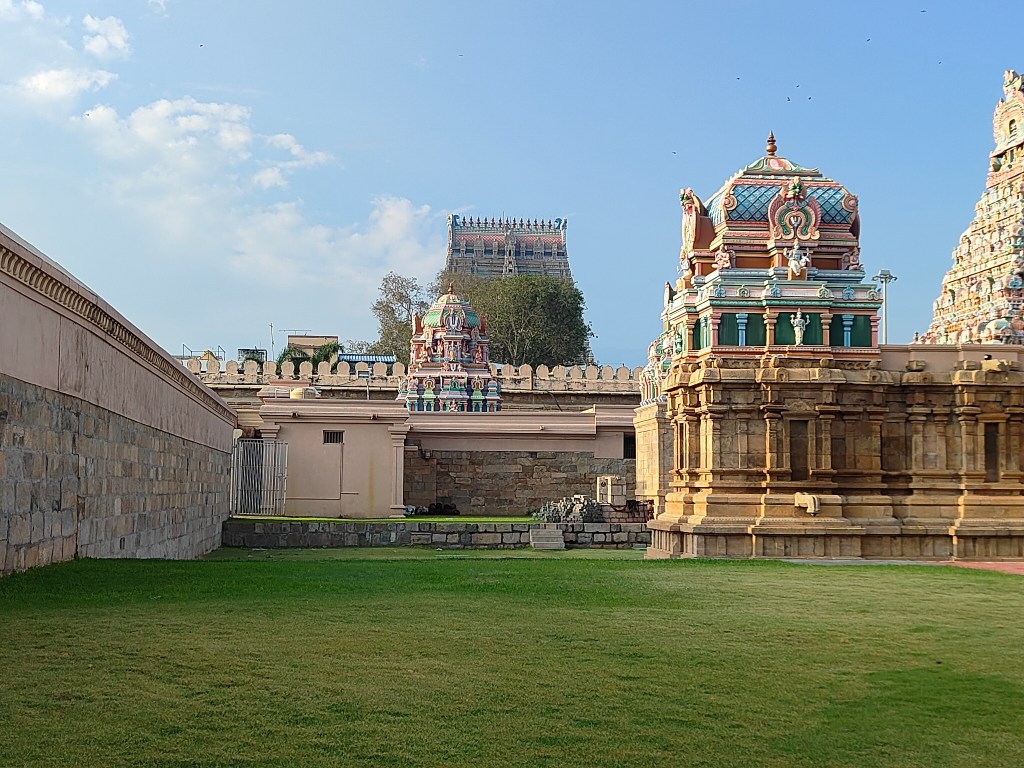
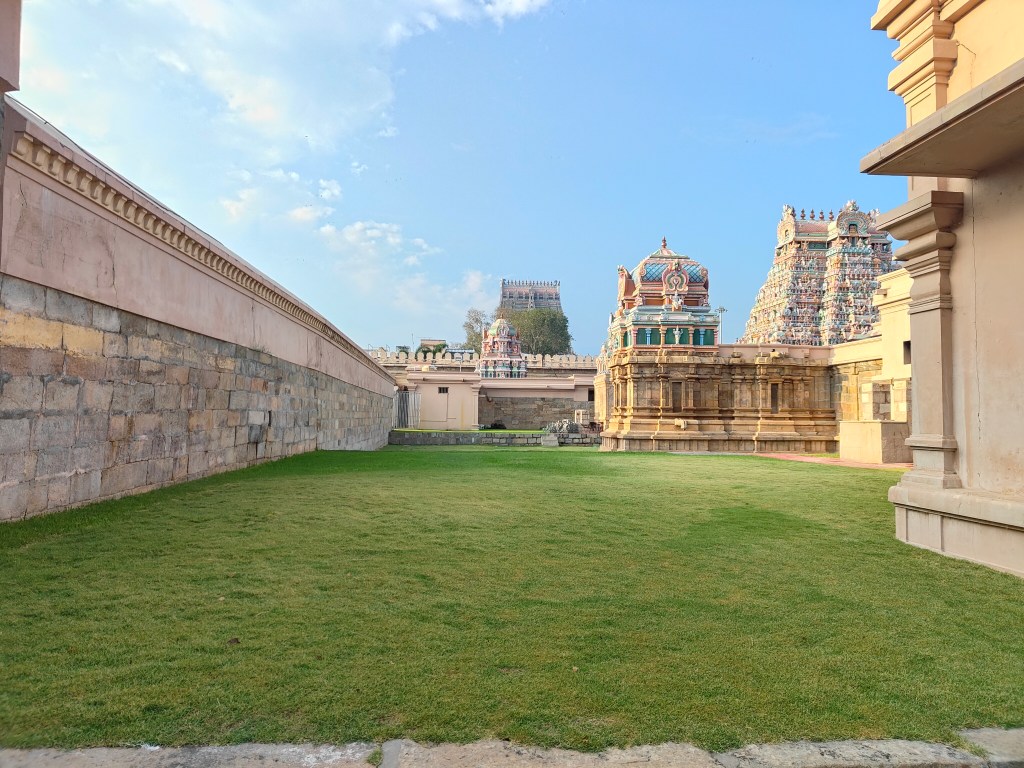
The exact origins of the temple remain unknown, but over centuries, several dynasties expanded and renovated the complex to its present form.
One of the most recent additions is the Raja Gopuram, a towering 240-foot gateway, completed in 1987. This is the tallest structure in the complex and stands at the outermost enclosure.
In total, the temple complex has 21 gopurams (gateway towers).
Among them, three are particularly notable.
The Three Prominent Gopurams
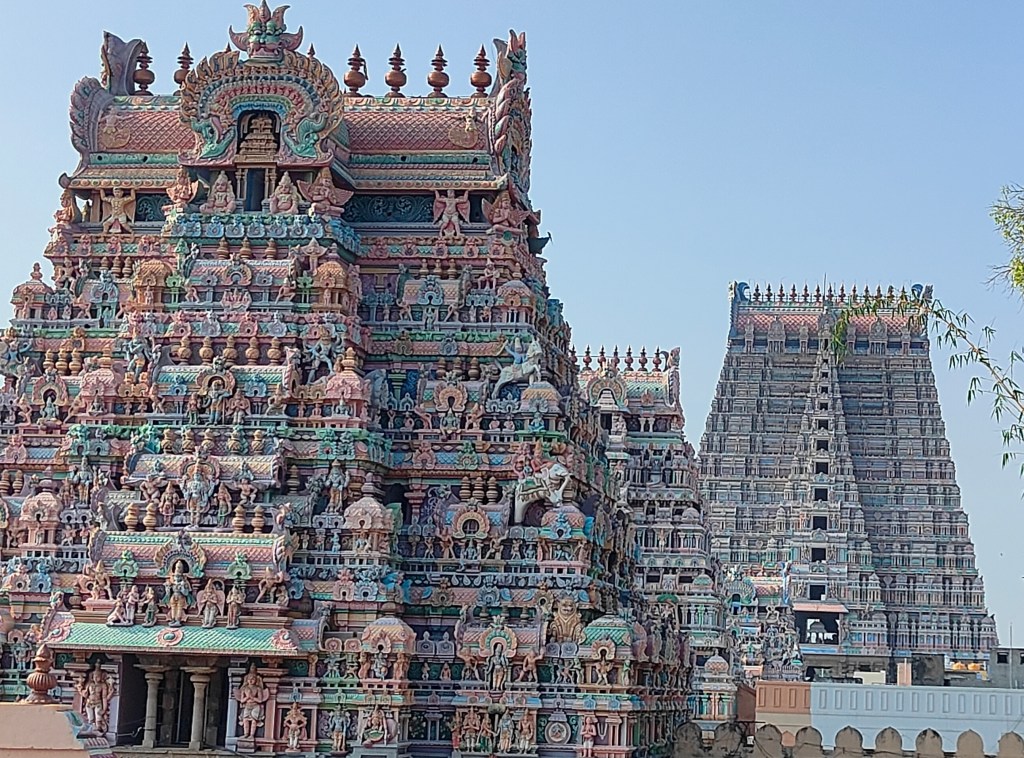
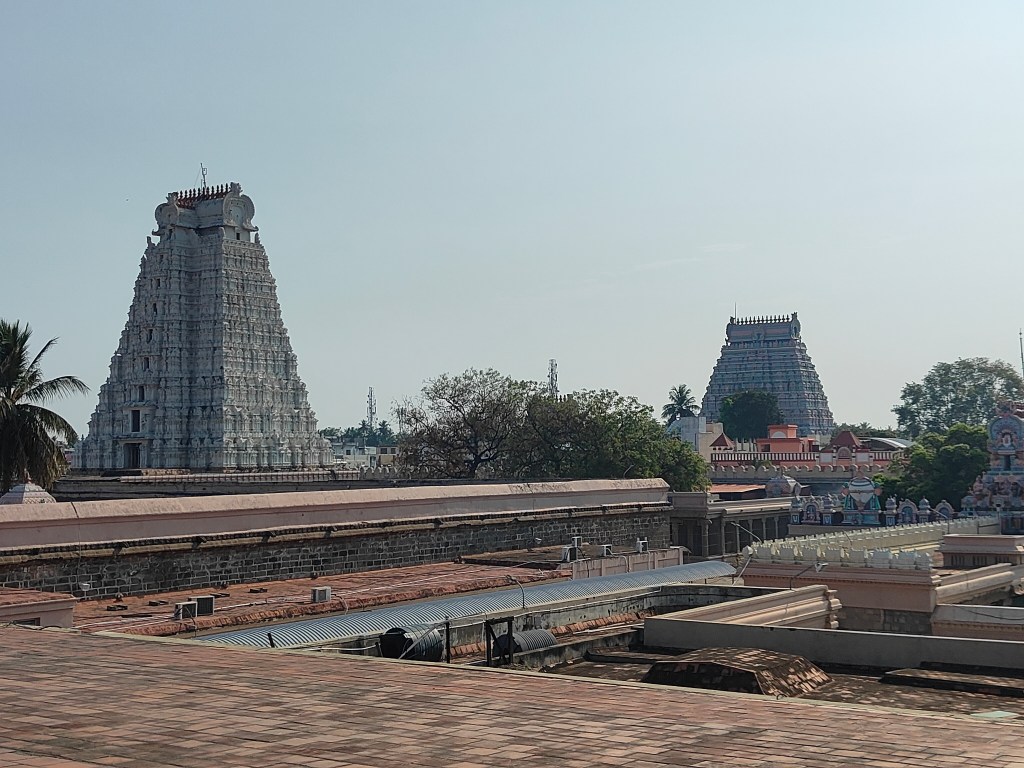
Raja Gopuram
The Raja Gopuram is the main entrance tower and immediately captures attention with its massive height and colorful sculptures. Completed in 1987 under the patronage of the Ahobila Mutt, it dominates the skyline of Srirangam.
Vellai Gopuram
The Vellai Gopuram has a unique story behind it. It is named after Vellayi, a temple dancer who sacrificed her life during a historical invasion. Unlike the other towers, this gopuram is plain white, symbolizing her sacrifice.
Golden Vimana
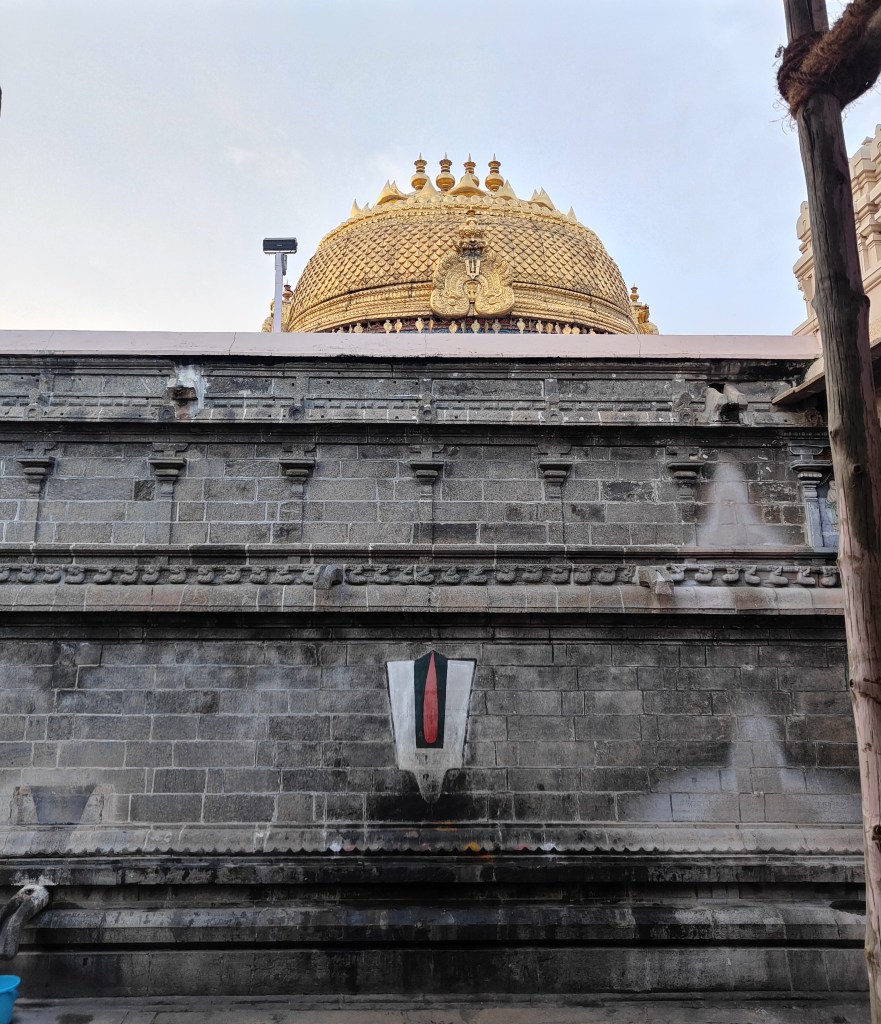
Above the Garbhagriha, the sanctum is crowned by a golden vimana. Though much smaller than the towering gopurams, its golden structure marks the sacred space where the main deity resides.
Exploring the Temple Complex
By 7:00 AM, we had completed our main darshan and began exploring the rest of the temple complex.
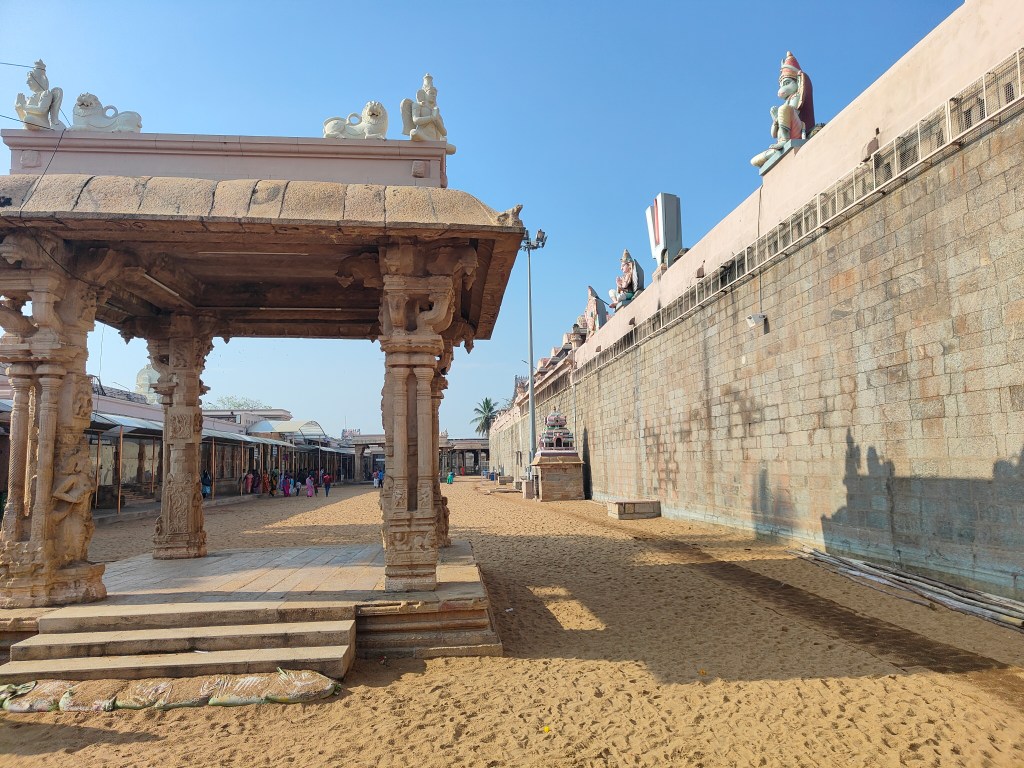
Our first stop was the Garuda Mandapam, where a large statue of Garuda, the divine vehicle of Vishnu, sits with folded hands facing Lord Ranganatha.
Interestingly, we once again saw the white horse and the elephant resting inside this hall after the ritual. Devotees were taking blessings from the temple elephant.
From there, we proceeded to the Chakrathalvar Temple, another important shrine within the complex.
Darshan of Ranganayaki Thayar
While exploring the temple, we were informed that the Ranganayaki Thayar temple would close by 8:00 AM.
We immediately hurried there.
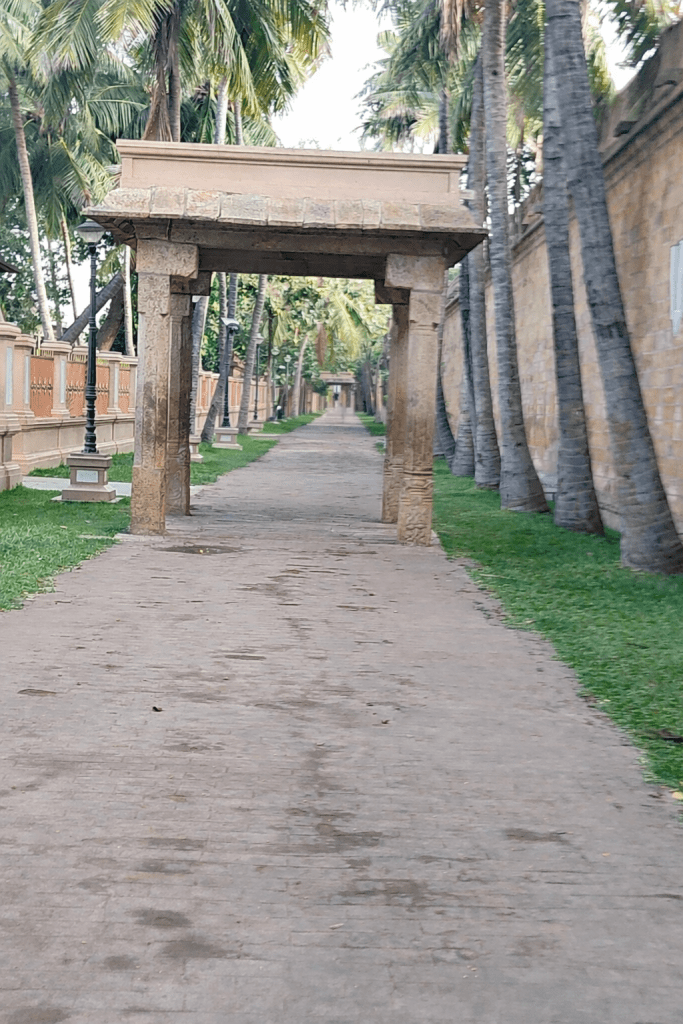
Sri Ranganayaki Thayar, the consort of Lord Ranganatha, is a form of Goddess Lakshmi. In Tamil, the word “Thayar” means Mother, highlighting the nurturing aspect of the goddess.
With a ₹50 special darshan ticket, we were able to complete our darshan in about 15 minutes, whereas the free darshan queue might have taken around 45 minutes.
The Legacy of Sri Ramanuja
Next, we visited the shrine of Sri Ramanuja, the great Hindu philosopher and theologian who lived between 1017 and 1137 CE.
Ramanuja played a pivotal role in shaping the Sri Vaishnavism tradition. While the roots of this tradition lie in the Vedas, it was popularized by the twelve Alvars, the saint-poets who lived between the 7th and 10th centuries.
The Alvars composed devotional hymns dedicated to Lord Vishnu known as the Nalayira Divya Prabandham, a collection of 4,000 verses (Pasurams) praising Vishnu.
These hymns were later compiled in the 10th century by Nathamuni and continue to be recited in Vishnu temples across South India during daily rituals and festivals.
The 108 Divya Desams
The verses of the Divya Prabandham praise 108 sacred Vishnu temples, known as the Divya Desams.
Of these:
- 106 temples are located on Earth
- 2 are believed to be in the divine realm
Among all these temples, Sri Ranganathaswamy Temple in Srirangam is considered the foremost, and it is mentioned the highest number of times in the Divya Prabandham.
Many Vaishnavite devotees aspire to visit all 106 earthly Divya Desams during their lifetime.
The Preserved Body of Sri Ramanuja
Srirangam was the center of Sri Vaishnavism during Ramanuja’s lifetime, and he spent most of his years here.
It is believed that he attained liberation in 1137 CE within this temple.
Remarkably, his mortal body has been preserved for nearly 900 years. The preservation is maintained through traditional methods using camphor and saffron paste, and devotees can still have darshan of his body inside the temple shrine.
Seeing this was truly astonishing.
Prasadam and the Temple Viewpoint
After completing the temple circuit clockwise around the main enclosure, we returned to the Garuda Mandapam, where prasadam was distributed.
We received a simple yet delicious meal of Puliyogare (tamarind rice) and Thayir Sadam (curd rice) — a comforting and homely offering.
Near the exit, just beyond the Garuda Mandapam, we noticed a sign pointing to a viewpoint.
Climbing a few steps led us to a panoramic view of the temple complex. From here, we could see all 21 gopurams rising around the temple, with the Raja Gopuram towering above them all.
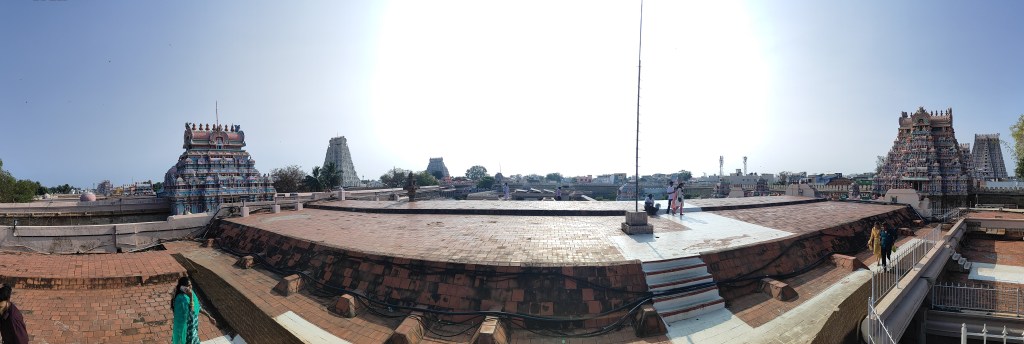
This is undoubtedly the best spot to take photographs of the temple complex.
Entry to the viewpoint costs ₹50 per person.
Although mobile phones are allowed inside the temple, photography and videography are strictly prohibited inside the sanctums (Garbhagrihas).
Completing Our Visit
With that, we concluded our visit to the magnificent Sri Ranganathaswamy Temple in Srirangam.
The early morning rituals, the grandeur of the temple complex, and the deep spiritual history associated with the place made this visit truly memorable.
This trip is part of our 3-day trip from Hyderabad covering Thanjavur and Kumbakonam along with Srirangam.
 Vagabonding Life!
One Comment Add yours